
Print on demand means selling without touching stock.
You upload a design, a supplier prints it only when someone buys, and you keep the difference. No warehouse. No stock sitting unsold in a spare room. No minimum order quantity holding you back from testing an idea.
That is the pitch, and for the most part it holds up. What most beginner guides skip is the part that decides whether it works for an Indonesian seller: which suppliers actually print and ship from inside Indonesia, what a Shopee-ready delivery timeline requires, and what your real costs look like once marketplace fees and shipping are added.
This guide walks through how to start print on demand in Indonesia in 2026 — the suppliers available, the true costs in rupiah, and the steps to place your first order.
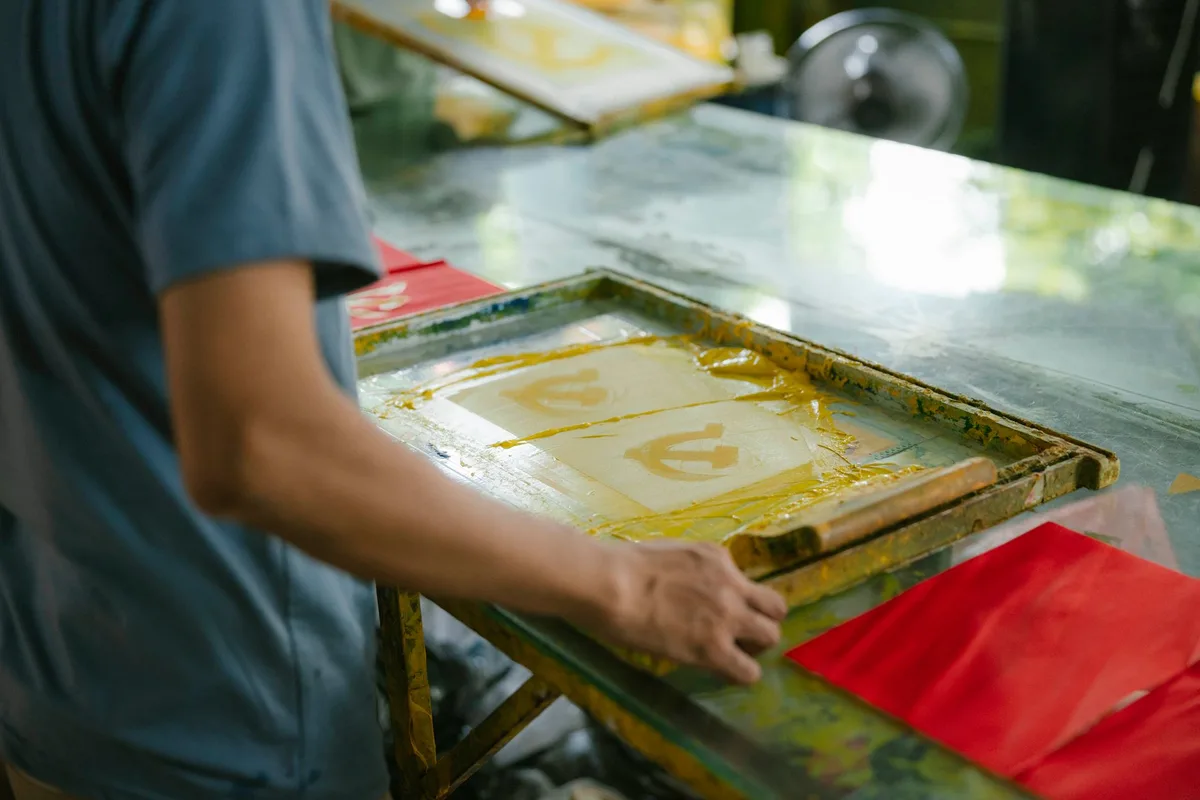
What Is Print on Demand and How Does It Work in Indonesia?
Print on demand is a fulfilment method, not a product category.
Print on demand (POD) is a business model in which a product is printed and shipped only after a customer places an order, so the seller never buys or stores inventory upfront. According to UKM Indonesia, this makes POD one of the lowest-risk ways for new sellers to start an online business because no capital is tied up in unsold stock.
Here is the sequence, step by step:
- You create a store on Shopee, Tokopedia, or your own website
- You design a product — a t-shirt, mug, tote bag, or phone case
- You list it in your store at your chosen price
- A customer orders and pays through your store
- The order routes to your POD supplier
- The supplier prints the item and ships it directly to the buyer
- You pay the supplier’s base cost and keep the rest as profit
In Indonesia, this model is common for kaos (t-shirts), hoodies, tote bags, mugs, and phone cases. Designs tied to local interests — daerah (regional) slang, kampus (campus) humor, community fandoms, and Islamic-themed graphics — tend to outperform generic templates, because they are not something a buyer can find on every other store.
The biggest decision you will make is local versus international fulfilment. A local supplier ships from within Indonesia, keeping delivery fast and marketplace-compliant. An international platform offers a bigger catalog, but overseas shipping adds well over a week. For the full picture on setting up your store first, read our guide to starting an online business in Indonesia.
What Print on Demand Platforms Are Available in Indonesia?
More options exist than most beginners realize — and not all of them fulfil locally.
Indonesian sellers can choose between local POD suppliers such as Printink.id, Ciptaloka, Tees.co.id, and Sablon.in, or international platforms such as Printful and Printify. Local suppliers ship from inside Indonesia and price in rupiah, which keeps you inside marketplace delivery windows. International platforms offer a wider product range but usually ship from outside the country, per UKM Indonesia’s overview of local versus overseas POD partners.
Here is how the main options compare:
| Platform | Based In | Ships From | Marketplace-Ready | Best For |
|---|---|---|---|---|
| Printink.id | Indonesia | Indonesia | Yes | Custom apparel, DTF printing, single-piece orders |
| Ciptaloka | Indonesia | Indonesia | Yes | Wide custom product range (kaos, mug, casing HP, home decor) |
| Tees.co.id | Indonesia | Indonesia | Yes | Apparel and fashion-focused designs |
| Sablon.in | Indonesia | Indonesia | Yes | Screen printing across varied product types |
| Printful | USA | USA / global network | No (overseas fulfilment) | Own-website sellers targeting buyers outside Indonesia |
| Printify | USA | Global print network | No (overseas fulfilment) | Largest product variety for international sellers |
Based on published service pages and platform listings gathered directly from each supplier and from UKM Indonesia’s local-vs-international POD comparison.
Local suppliers earn their place here because they solve what trips up most beginners: marketplace shipping windows. Printink.id has operated since 2017, accepts orders from a single piece, and gives every order a live tracking link. Ciptaloka runs more like a POD marketplace — ready-made custom categories (kaos, jackets, mugs, bottles, phone cases, home decor, photo prints) with published starting prices, so you can estimate margin before designing anything. Tees.co.id and Sablon.in focus narrowly on apparel and screen-printed goods, better for sellers who want to specialize.
If you are weighing print on demand against holding your own stock, our dropshipping in Indonesia guide covers the same no-inventory logic applied to non-custom products.
How Do You Choose a Reliable Print on Demand Supplier in Indonesia?
Not every supplier that shows up in a marketplace search is worth trusting with your first order.
A reliable print on demand supplier in Indonesia should offer order tracking, accept single-piece orders for testing, publish prices upfront, and have a verifiable operating history. Suppliers that refuse to send samples or demand large upfront deposits before any product is shown are the clearest warning signs to avoid.
Use these criteria before committing to a supplier:
1. Can you order a single sample first? A trustworthy POD supplier lets you order one unit before committing to a design at scale. A supplier that insists on a bulk minimum before you have seen the physical product is a red flag.
2. Is pricing published, not negotiated? Transparent pricing means you can calculate your margin honestly before listing a product. Our markup calculator turns a supplier’s base price into a realistic selling price.
3. Do they track production in real time? Printink.id, for example, gives every order a unique tracking page. This matters because “where is my order” complaints are one of the fastest ways to damage a marketplace seller rating.
4. How long have they operated? A supplier with several years of order history has a track record you can check through reviews. A brand-new supplier is not automatically bad, but it carries more risk on your first orders.
5. Do they ship within marketplace deadlines? Shopee and Tokopedia both expect sellers to ship within a short window after an order is placed. Confirm your supplier’s stated dispatch time — local suppliers are built for this, overseas ones frequently are not.
How Much Does Print on Demand Cost in Indonesia?
The supplier’s base price is only one line in your real cost breakdown.
Print on demand sellers in Indonesia typically face four cost layers: the supplier’s base product price, marketplace commission on each sale, buyer-facing shipping, and business registration through the free NIB (Nomor Induk Berusaha) system. Local POD suppliers such as Ciptaloka publish base prices roughly in the Rp 88,000-160,000 range depending on product category, according to their published catalog.
Here is a simplified cost example for a custom t-shirt sold on a marketplace:
| Cost Item | Estimated Amount (IDR) |
|---|---|
| POD base cost (t-shirt + print) | Rp 45,000-90,000 |
| Marketplace commission (typically a few percent per category) | Rp 2,000-6,000 |
| Shipping to buyer (buyer-paid or subsidized) | Rp 9,000-20,000 |
| Your break-even sale price | Rp 56,000-116,000 |
| Target sale price for a 30% margin | Rp 80,000-165,000 |
Marketplace commission rates vary by category — check Shopee Seller Centre ID or Tokopedia Seller Center for the current rate before pricing.
Three costs beginners consistently underestimate:
Sample orders. Order at least one physical sample of every design before listing it. Budget roughly Rp 50,000-150,000 per sample. A buyer who receives washed-out colors or a crooked print placement leaves a review that follows your store for months — samples catch this first.
Design tools. Canva’s free tier covers most simple designs; Canva Pro runs approximately Rp 95,000/month for extra templates. If design is not your strength, freelance marketplaces and local illustrator communities can produce one for a flat fee.
Business registration. Registering a Nomor Induk Berusaha (NIB) through Indonesia’s OSS system is free and is the standard legal starting point for regular online selling, even a one-person POD store.
How Do You Place Your First Print on Demand Order?
Do not design ten products and hope one sells. Start narrow, test, then expand.

Step 1: Pick one product and one niche. Choose a single product type — a t-shirt is the easiest start — and a specific audience: a hobby community, a regional identity, a campus in-joke. “Everyone” competes with thousands of generic listings; a specific group has far less competition.
Step 2: Create or commission the design. Build it yourself in Canva, or brief a freelance designer with the print area dimensions your supplier requires. Low-resolution files print blurry, and that mistake only surfaces after a customer complains.
Step 3: Order one physical sample. Before listing anything, order a single unit. Check print color accuracy, material quality, and packaging. This step is the difference between a five-star first review and a refund request.
Step 4: List the product with an honest price. Use your cost breakdown to cover base cost, commission, and shipping with margin left over. Underpricing to “get a first sale” trains buyers to expect a price you cannot sustain.
Step 5: Run a small test window. List 3-5 designs for two to four weeks. Track clicks versus actual sales — those are different signals, and only the second tells you whether to keep the design.
Step 6: Reorder or retire based on data. If a design sells, keep it live. If it gets views but no sales after a fair test window, retire it and try a new angle within the same niche.
What Mistakes Should Beginners Avoid With Print on Demand in Indonesia?
Skipping the sample order. Listing a design straight from a mockup tool without seeing the physical print is the single most common mistake. Mockups do not show print quality, fabric weight, or color accuracy.
Choosing an overseas-only supplier for a marketplace store. If Shopee or Tokopedia is your main channel, a supplier shipping from outside Indonesia will routinely miss the delivery window and risks seller penalties.
Pricing without calculating every cost layer. The supplier’s listed price is not your total cost. Add commission and shipping first, or a “profitable” order can quietly lose money.
Designing for everyone instead of someone. A generic design competes with thousands of near-identical listings. A design built for one specific audience has a clearer reason to be chosen.
Relying on a single supplier. If your only supplier runs out of material or delays an order, your catalog stalls. Keep a second supplier in reserve for your best-selling designs.
Which Print on Demand Platform Should You Start With in Indonesia?
The right starting point depends on where you plan to sell.
For sellers starting on Shopee or Tokopedia, a local supplier such as Printink.id or Ciptaloka is the safer starting point because they fulfil from inside Indonesia and stay within marketplace shipping windows. For sellers running their own website and targeting buyers outside Indonesia, Printful or Printify offer a wider catalog at the cost of longer delivery times to local buyers.
| Your Situation | Recommended Starting Point | Reason |
|---|---|---|
| Starting on Shopee or Tokopedia | Printink.id or Ciptaloka | Local fulfilment, marketplace-compatible shipping |
| Apparel-only focus | Tees.co.id or Sablon.in | Specialized in printed apparel |
| Own website, Indonesian buyers | Printink.id or Ciptaloka | Faster local delivery |
| Own website, international buyers | Printful or Printify | Wider catalog, established for cross-border stores |
One honest note before you start: print on demand is competitive. Generic designs with popular quotes are everywhere, on every platform, in every niche. Sellers who build a lasting POD business in Indonesia are usually the ones who pick a specific community — a regional identity, a hobby group, a campus crowd — and design consistently for that group rather than chasing whatever trend is loudest this week.
Start with one local supplier, one niche, and one honestly-priced product. Once you know a design sells, expanding to more products and more platforms is the easy part.

For a full comparison of where to sell once your products are ready, read our best ecommerce platforms in Indonesia guide, or check our Shopify review for Indonesian sellers if you are considering your own website instead of a marketplace-only store.

Frequently Asked Questions
What is print on demand and how does it work in Indonesia?
Print on demand (POD) is a business model where a supplier prints and ships a product only after a customer orders it, so you never hold stock. In Indonesia, sellers design products, list them on Shopee, Tokopedia, or their own store, and a POD partner such as Printink.id or Ciptaloka handles printing and delivery.
What are the best print on demand suppliers in Indonesia?
Local suppliers Tees.co.id, Printink.id, Ciptaloka, and Sablon.in fulfil orders from within Indonesia, which keeps shipping fast and pricing in rupiah. International platforms like Printful and Printify offer wider product catalogs but ship from overseas, adding 10-20 days for delivery to Indonesian buyers.
How much capital do you need to start print on demand in Indonesia?
You can start print on demand in Indonesia with no product inventory cost, since items print only after a sale. Realistic starting costs are for samples and testing: typically Rp 100,000-300,000 for a first batch of sample products across 2-3 local suppliers, plus design software and marketplace listing time.
Can you sell print on demand products on Shopee and Tokopedia?
Yes, print on demand products can be sold on both Shopee and Tokopedia. Because marketplace shipping windows are short, choose a POD supplier that fulfils from within Indonesia — local suppliers like Printink.id and Ciptaloka are built for this, while overseas-only platforms often miss marketplace shipping deadlines.
Do you need to register a business for print on demand in Indonesia?
Yes. Selling products regularly, including print on demand items, counts as running a business under Indonesian law. Registering a Nomor Induk Berusaha (NIB) through the OSS system (oss.go.id) is free and is the standard first step, even for a small one-person online store.